





Introduction – Subjectivism, Objectivism, Neutrality and a long rant
It’s not the consumers job to know what they want.
Was it ever? Music and how we consume it constantly changes. The factor progressing the evolution seems to be portability. Cassettes took over when the Walkman appeared. CDs seriously took over when players started appearing in cars. Mini-Disc had a short-lived period of glory, but was easily killed off by the iPod-offspring. The smartphone severely injured the iPod. Streaming is bleeding the P2P-community (conveniently suiting both The Man and The Consumer). Last but not least “Loudspeaker”? Isn’t that something that’s built-in somewhere in one’s netbook and flat-TV?”. Exactly. Quad erat demonstrandum.
What this is showing us is that the audiophile journey doesn’t start with a 70’s vintage Marantz receiver and modified Klipsch horns any more. It starts with an iPod Nano and iBuds at the age of 12-13. Headphones are transitioning from being an auxiliary “sound on the move”/”the kids are asleep”-item to “this is how I enjoy music”. But this is nothing new to most of us. It’s just a re-cap of the past 5 years.
#1: Nowadays the music journey starts and is centered around headphones and digital audio.
In the land of headphones we have lots of flavors. Every manufacturer has their own notion of what headphones should sound like, to suit the audience they’re targeting. Even though every manufacturer gives the impressions that this is exactly the sound they wanted to create, let’s be honest about it. It’s a mix of the (1) technology used (i.e. driver types, material, baffle, damping etc.) (2) manufacturing costs and/or LEAN (i.e. can we attain an approximation of the sound while retaining some marginal to make a few bucks) and last but not least (3) this is the way we’ve always done it and what the consumer wants. Some might say that the more choices the better. Freedom to choose makes us happier. Nope. Wrong. Modern science shows that 2 choices are indeed better than 1, 3 still better than 2, etc. But at a certain point it saturates and then, the unhappiness actually can over-weigh, since we start obsessing about “Well I bought this one, but if I would have bought the other one ‘bass would have been better’ or ‘it would have been 100 USD cheaper’ etc.” Prof. Dan Gilbert has several talks that can be found online about this. Check it out, if the prior part sounds whack.
How many of us really started this hobby with the vision to have 20 headphones and 6 amps, and be switching back-and-forth as soon as we change track? Come on seriously. We are trying to adapt our equipment to (1) suit our variability in music choice and mood (2) to improve flaws in amps/headphones . But maybe it’s the result of not being able to choose because we simply can’t make up our minds of what is best or (god forbid) the differences aren’t that big after a while. We’re looking at the same picture but we emphasize different parts of it. There’s still no established standard to measure headphones, that all manufacturers use. I’m talking about the flat line that cleaned up the great variability in speaker hi-fi. It will come eventually. Until then… What are we buying if we don’t really know what is what and “what sound signature is closest to the perfect balance”? What I’m trying to say is not that we can’t trust our ears. Our ears are fine, our references are not so fine. Wait, what does he mean? Easy, don’t flame me on this one, but it’s my generalized opinion that we (and by that I mean the most of us including me) don’t have a good reference to compare with. How many of us have actually heard a reference loudspeaker rig in a acoustically treated room? Now that’s neutrality and sound stage. And to some extent it’s the same way most of the music that we listen to is recorded, mixed and mastered. But a reference headphone rig? The opinions differ. Let’s discuss it through an example.
What is reference? Generally speaking I would say that when a potential buyer of an approx 1000 USD-headphone starts reading around, three different groups are quite evident. Each preaching their own reference. (1) The LCD-2’ers, (2) The HE-500’ers and (3) The HD-800’ers. And I like generalizing so here we go… (1) Great bass, soft mids, good for “normal music” but lacks air and separation (2) Less bass, a tiny bit more air in the treble (and cheaper than the rest) (3) Bright, “bad” bass, fantastic sound stage to be used with well-recorded music.
This is not the truth, but you recognize it right? I however don’t agree with a word of what I just wrote. A LCD-2/LCD-3 driven well is very close to a well-driven HD-800 which in turn comes very close to a well-driven HE-500/HE-6. But another important thing. When driven correctly (or should I say synergistic) they all start measuring even flatter. So the combinations that we choose with our ears, actually has some scientific basis. But all can not be measured. And what should we strive for?
Even though we might start up liking our music experience flavored, a lot of us usually (if it’s monetary possible) end up searching for the neutrality in the headphones we chose. A single-blind study (not controlled, since they didn’t use a control/reference, we’ll get to that later) with 6 popular circum-aural headphones from Harman International (Harman/Kardon, AKG etc.) called “The Relationship between Perception and Measurement of Headphone Sound Quality” came to the following conclusion “In terms of overall sound quality, the most preferred headphones were perceived to have the most neutral spectral balance with the lowest coloration. When measured on an acoustic coupler, the most preferred headphones produced the smoothest and flattest amplitude response…” Interesting. Right?
#2: More choices are not always better, especially when a lot of us unfortunately do not have a norm of the sound signature from a flat sounding speaker rig. However some of us (that ‘fortunately’ have enough to spend) compulsively buy and sell gear until we find what – we didn’t initially know – we were searching for.
I sincerely hope that I’m not interpreted as judging or patronizing. That’s not my intent. What I’m trying to get to, is the point that started this intro “We do not know what we want”. We eventually understand what we want by experiencing what we don’t want. The Loudness War had to wreck some serious mayhem before we could look back and see what had happened (and of course the tech part evolving away from peak level metering toward general loudness metering). We had to listen to 128 kbps MP3’s before we could appreciate lossless CD-rips fully. – Now the whole bit-craze and kHz-madness has started. It reminds me of the megapixel-war in photography. Don’t even get me started. – And of course we try to navigate through all the headphone gear available finding the synergistic components that sound good for a reasonable (the meaning of that is highly individual) buck. I think it’s good that people are buying Beats. Because, at least they’re better than iBuds. And it’s a step in the right direction, even though it involves a slight deviation from the “shortest” path. Because it can never be wrong if we eventually end up where we should in the end.
On the other hand. Money. We all have a limited supply of it, and we try to balance our lives around it. Getting the most out of what we want to do in lots of aspects of life. Taking too many deviations in this hobby can get pretty costly after a while. So we need something to help us. Other than opinions. Because as always. We usually take part of an avid preference when listening to others, however not always knowing their reference. I’m not saying anyone is wrong. Neither am I saying that I am right. Oh, the contrary. We are all as right as we are wrong. If we haven’t had the possibility to listen to a lot of different rigs, of course Rig X (the best of the ones we have experienced for a prolonged time) will be the best we’ve ever heard. So… it takes a long while to build up a database in our head of different headphones, amps and sources and while doing this not letting our own recall bias affect our audio memory too much. It’s tricky.
#3: So the quest for neutrality or should I say perfect synergy, yields two things (1) lots of experience (2) a hole in our pockets (possibly larger than it should have been, if we would’ve had something more than just our ears and other people’s opinions to base our decisions on). So it’s a two-edged sword. And headphone amps and headphone are small items. Imagine the poor loudspeaker-guys in their quest. Ouch, now that’s a lot of lost dollars on shipping & handling.
“Subjective objectivist” is a good denomination about accepting measurements and the scientific approach in addition to using our ears. Don’t think that it has been used too much, but I think it explains what Tyll at InnerFidelity and Marv at Changstar/Effin’ Ringing are doing. Subjectivism isn’t everything and objectivism isn’t everything. They are both equally important. Neither is one more correct than the other. I think the future is in the complementing features of these two. Because, come on, “12 Hz – 20 kHz (-3 dB)” used by some manufacturers is like judging the comfort factor of a car by looking at its’ miles-per-gallon. And by the way. Is it a coincidence that cars became much safer to crash after EuroNCAP started conducting crash dummy tests? No of course not. We need references and objectivity. It’s an aid for us consumers when choosing.
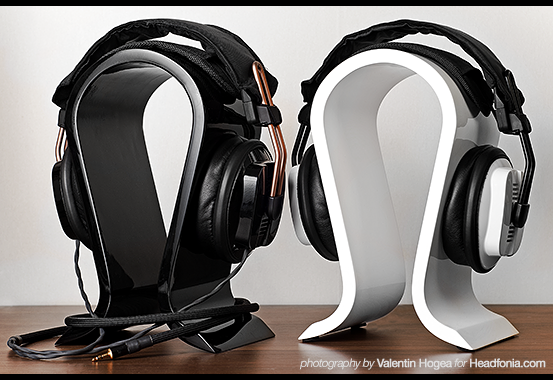
All that talk and not a word about the headphones? This dude drank too much coffee. Nope, but I felt there was a need for some background before starting to wave the neutrality flag. Because I really like this trying-to-be-neutral-headphone. Also known as LFF Paradox or Paradox Sounds T50RP. Or the “500 to 1000 USD”-199 USD headphone.
Next page: A 800 USD T50RP?




L.
I’m thinking: Page breaks 😉
Valentin
It actually had 4 pages but something was really weird when I posted it..
Page 1 was good
Page 2 was emtpy and showed a total of 7 pages
Page 3 jumped pass the whole contents of page 2, but otherwise good
Page 4 was good
When logical things aren’t logical… It’s annoying.
L.
yeah the system likes to play tricks on you. A ctrl F5 normally solves that issue though 😉
Mike
Done. We are so unprofessional.
L.
A beer for Mike!
Valentin
Maybe remove all comments so far? 😉
Thx Mike!
Rūdolfs Putniņš
Review of the year!
Great job, Valentin! I might pick one up instead of the HE500.
I just hope LFF is able to keep up with the orders!
L.
Awesome review, maybe a bit early to give it the gold medal though. Last week I saw an article with the “Best headphones of 2013” which kind of is extremely funny as only 2 months had passed and lots of new headphones will be released over the next 10 months 🙂
Rūdolfs Putniņš
Bah! The headphone of the year is HD650, everyone knows that! And if anyone thinks differently they are just not properly amping it!
But really, I very much enjoyed this review! Especially the intro.
Trent_D
FINALLY! A man talking sense!
Valentin
I’m glad that several found the intro interesting. I was a bit uncertain to how it would be interpreted.
My goal was to share it from “my own eyes” not that many years ago…
Trent_D
I think a personal touch is always welcomed in a review.
Valentin
Thx!
Last I had contact with LFF, he has upgraded the work shop with some pretty high-tech stuff for a “modder”. Ventilated paint booths etc. etc.
Let’s hope Fostex keeps the T50RP at 199 USD. The jump from 99 about 6 months ago was enough. 😉
dalethorn
Glad to see he’s not breathing any paint fumes. Could make the job more fun, though.
Trent_D
Another excellent review Valentin! I hope no other guest reviews get posted soon, as they might pale in comparison.
L.
Actually, there are and good ones too!
Trent_D
Obviously (to you anyway), I am self-deprecating, but I really do like the way Valentin writes.
Spencer Chan
Me to. I like the no nonsense tone.
Valentin
Thx guys. I try to be as objective as possible. And give a good background and that those that read feel that it has been compared in a as non-biased way possible.
Mike
Me too, I really like how Valentin writes.
dalethorn
Very clear review of the headphone, and good to have that background to put everything into perspective.
Valentin
Glad that you found it imformative.
As I have said earlier. I would never dare review something if I didn’t feel I had a pretty good hum of the competition. Alas, there will never be a NAD M51 review by me, since it’s impossible for me to compare it to the DACs it should be compared to. 🙂
NHong
Great review. Also, not really headphone related, but where did you get those stands from? They’re gorgeous.
Valentin
Great that you liked it!
Regarding the stands. A close friend made a small batch of stands. All sold out. 🙁
/V
L.
I got 6. Should have gotten more
shipsupt
What did your brother think of his gift? (You generous guy!) I’m wondering what a non-audiophile type thinks of the Paradox?
Mike
That’s a good question. Val?
Valentin
Hi Chris!
Brother-in-law! 😉 Anyway… At first he thought the bass was too thin. This was moving up from some really poor 20-30 USD USD IEMs.
I told him too give them a couple of days and if he still thought the bass was too thin I would lend him an amp with EQ.
After a couple of days he thought they were more than perfect.
The reference-talk I had in the beginning. To him they were bass-thin compared to his reference.
I on the other hand I would definitely not describe them as bass-thin. More on the bass-heavy side of headphones (in general).
/V
Carl
Nice piece of writing! Just got home after midnight and really enjoyed reading it; intro was interesting and even entertaining. I really enjoy the mix of writing styles on headfonia, all generally have a balanced, interesting and ‘generous’ feel. That also includes the help given in the comments too; they often feel almost like mini-mini-reviews!
I also really liked the photos, especially the close-up of the black pair on the stand at the bottom of page 2; the photo-aesthetic that Headfonia has is just fabulous and sets the site apart from others from the get-go.
Mike
Thanks, Carl. I enjoy Valentin’s writing style very much too.
Valentin
Thanks Carl! I guess that I will keep writing then! 😉
Sasmit
nice review! Though perhaps the first page rant could be shortened ……so since HP100 also had the same neutral description, have you had the chance to compare them?
Valentin
The rant.. Well, some like it some dont. It might depend on how much one has read or thought about the headphone business in general.
The HP100… I will try to get them for some listening impressions.
However, bear in mind that Lieven is comparing them to 300-400 USD-headphones and that I’m comparing the Paradox to 1500-1950 USD headphones. My guess is that they are similar, but in different price brackets.
/V
Sasmit
I did enjoy the research aspects and thanks valentin
L.
i’ll try to send them to you this week
Sasmit
Hi Valentin, I was wondering have you had a chance to compare it to the new mad dogs with alpha pads?
Valentin
Hi, No unfortunately not. Although this is a question I’ve asked myself too. Is the Paradox worth the extra $ compared to Mag Dog. I can’t answer on that point. However, the objective measurements I’ve seen comparing Mad Dogs and Paradox are in the latters favour.
Sasmit
Thanks Valentin…..
Jonathan Yeung
valentin, first of all, really great read! second, i thought the more expensive models are balanced with custom cables while the basic mod doesnt mess with the cable part so its still single entry? third, have you heard of the mad dog? can you make a comparison to that? thanks
Valentin
Hi Jonathan,
Great. Thanks!
—–
Level 1 is just sound modding and new earpads.
Level 2 includes paint job, comfort strap and double-entry recable. That can be terminated to your choice. A tip would be to have it balanced with a SE-adapter.
Level 3 can have detachable cable if one wants.
—
Regarding the new Mad Dogs. I’ve contaced MrSpeakers to try to obtain a review sample of the new updated one. So we’ll see what the future holds.
All the best,
V
Jonathan Yeung
thanks for the info, and im looking forward to see the comparison with the mad dog alpha pad mod, i have neither, i have the stock fostex t50rp though and i dont like it that much
Jonathan Yeung
hey valentin, one more question, if i dont like the stock fostex t50rp, is that kinda an indicator that i wont like the paradox?
Valentin
Hi Jonathan,
Not necessarily. They are very-very different.
If you don’t like a BMW 320d doesn’t mean that you won’t like a BMW M3. 😉
Jonathan Yeung
thanks for the reply, valentin 🙂
Sam Pascoe
You post was an entertaining rant. The only thing I would add, being someone in the music industry, I have been in many studios with treated rooms. I have seen mastering engineers use anything from ath-m30’s to hd6x0’s. True neutrality is overrated, even when doing mastering, the engineer will use other songs in the same genre as a template or benchmark to match. So unless you were there for the recording, for which I have done a several, after all of the mixing is done, what you hear is nothing like the original. Just find something that allows you to get lost in the music and forget about the equipment, that is the key to finding the best setup
dalethorn
New technology can be a blessing and a curse. It allows you more flexibility making the music, but it’s hard to wear three different headphones for different genres when you’re riding the bus or a plane.
Carl
Just out of sheer curiosity(as I’m not likely to hear either anytime soon!), I wonder how this would stand up to a listening comparison with the TH-900.
You have been comparing it very favourably to other high-end ‘phones, so why not it own exceedingly big brother?!
Mike
I have the TH900 and TH600 here, listening out of the HP-A8 but too bad I don’t have the Paradox around.
They are two high end dynamic headphones though, very different than planers.
Would I say that they are better than a vanilla Fostex T50RP or a Mad Dog headphone? Definitely as these should be compared to the other $1K+ dynamic headphones or at least the high end orthos.
Valentin
I have not had access to a TH900 to be able to give a honest comparision.
However, paying 1800€ in EU for a headphone that is 1250€ in Japan… Something is very-very fishy in the distribution chain I must say. The same for HP-A8. Close to 1750€ in EU, 840€ in Japan.
In short. Until Fostex sort out their distribution. I’m not interested. 😉
It didn’t answer your question. But I hope you understand my viewpoint.
/V
DaveWave
Nicely done. Your intro is one of the most intelligent pieces on headphones that I have read. I especially like your reduction of the LCD-2 vs HE-500 vs HD800 debates to three basic generalizations–stereotypes, if you will, in a no pejorative sense of the term.
You should have published it separately, as your review of the LFF Paradox did not match the clarity of your intro, unfortunately.
Keep up the good work!
Sam
I’m confused. How are these 199 USD?
L.
The stock fostex?
Sam
The stock T50RP were selling for $75 and now are around $100.
Valentin
MRSP for T50RP is 199 USD.
Just as the MRSP for Sennheiser HD800 is 1499 USD.
If you can find them cheaper than the MRSP, well that’s something completely different. 😉
Papoom Vibhatasilpin
Great article. Love it.
Portal
“A LCD-2/LCD-3 driven well is very close to a well-driven HD-800”
All credibility lost. Stopped reading there.
Valentin
Haters wanna hate, lovers wanna love.
jtr3
Thank you for your review of the Paradox. I’ve been interested in a more thorough write-up. Overall, well done, although a little editing would’ve given it a more professional polish. One question: you mentioned the HE-500 in the intro but is there reason no direct sound comparison was made with HiFiMAN?
Rūdolfs Putniņš
A Paradox is coming my way. Let’s see if I did right by selling the HD650.
L.
Do keep us posted R!
Rūdolfs Putniņš
I fully concur with everything Valentin said. Mind. Blown.
L.
Glad to hear that!
Dave Ulrich
Where did you get it, Mr. R?
Rūdolfs Putniņš
A guy in UK was selling the basic version. Took it off of him for like 240GBP.
Andrew Muse
Might want to edit in a bit about the new Paradox Slants (with a bit emphasized bass and larger soundstage from what I hear), and the upcoming Enigma.