




After having finished the JH Audio comparison, this is the next question that I want to see answered. A lot of people has been asking about it too, if the JH16 is so good, how does it perform next to the HD800.
To start with, I always recommend the use of a good quality recorded material when evaluating a high end headphone such as the HD800 or the JH16. Often, these are open mic-ed and live recorded material, as such recordings capture the original acoustic environment, which is not present in closed mic-ed recording. If you’re using a closed mic-ed recording, you can’t say that a certain headphone sounds closer to how you hear it in real life, because the soundstage information is added later in the mixing process. I also find that the difference in closed mic-ed recording quality is very great because there is so much variable in the mixing process, where open mic-ed recording tend to be more consistent in quality.
Part of the magic with full size headphones is how they create a nice big headstage on the ears. Although custom IEMs are able to recreate the soundstage (which is inherent in the recording) through high resolution drivers, they have zero headstage which lends to a nice airy sound with full size headphones.
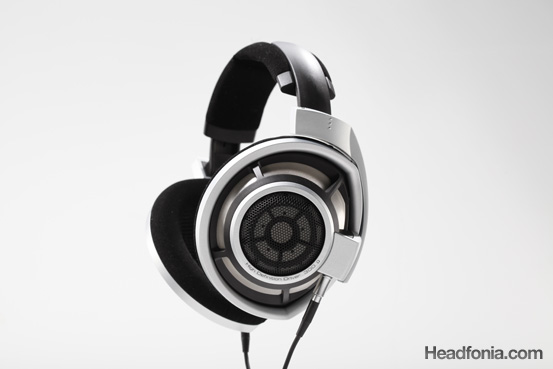
As a result, on IEMs like the JH16, the impression of the soundstage takes place inside the head, where from a full size headphone, they are laid out outside and from around the head. Hence the experience is very different. This is the first part that you can never get with an IEM. My friends confirmed this by saying that full size headphone have a certain feel that doesn’t exist on IEMs, even the JH16.
I’m not saying that the soundstage on the JH16 is inferior, because actually, it isn’t. Comparing the soundstage of both headphones, I found several differences which makes each headphone unique in their own sense:
Instruments on the JH16 is pushed more to the left and the right edges of the soundstage, where on the HD800 they blend in more to the center area. As a result, on the JH16, separation is more obvious, but on a good system where instrument separation is already very good, the JH16’s left and right soundstage image is not as integrated as the one in the HD800.
Distance information is much more evident on the HD800. On a live jazz recording, you can normally differentiate between the lead instrument (say, a saxophone) and the background instrument. On the HD800, the saxophone takes a very forward positioning, and you can almost imagine the saxophone being in the limelight, with everything else happening in the background. On the JH16, this is less evident, and every instrument occupying roughly the same amount of space within the soundstage.
I can imagine that on portable systems that are not as revealing, the JH16 system may sound as it’s portraying the soundstage clearer, as every instrument can be heard as clearly (while on the HD800, the supporting instruments are less audible). But on a good resolution desktop system, the JH16’s soundstage sounds quite flat in comparison to the HD800.
Due to the HD800’s more resolving nature, sometimes a closed mic-ed recording may sound unnatural, like the lead singer sounding too forward and ruining the overall music presentation. The JH16, somewhat less resolving of the recording, is more consistent in presenting an ideal music presentation despite variations in recording quality. If you have read the HD800 and the T1 comparison review, you will also see that both flagship headphones are good for one type of music, and not so good with another. The JH16 is actually much more balanced sounding than the two full size flagships, excelling at every music I throw at it.
Being more universal sounding does not mean that the JH16 bested the two flagship. The sense of awe that I get from listening to the HD800 is still greater than what I get from listening to the JH16, even on the same desktop set up.
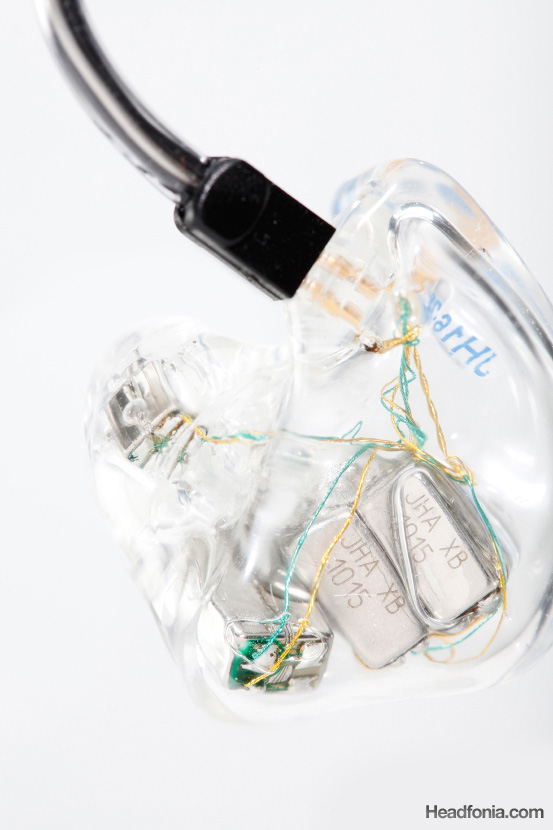
In terms of source requirement, I actually think that the JH16 is very demanding, though still less demanding than the HD800. The reason that we use a custom like the JH16 with the common portable DAP is because it was designed for that purpose. But when listening to the JH16 through an Ipod really doesn’t give me the satisfaction that the JH16 is theoretically capable of. This is why I predict that more and more people will discover the need of a high quality DAP like the Hifiman HM-801, as the IEM technology evolves to be better by the day.




Daniel
Nice comparison Mike. I was just wondering, are you getting the JH-3A system? If yes, please do a comparison against the HD800 again. Thanks.
Mike
Sure thing, Daniel. No promises for now, as the JH-3A is really expensive.
buz
So where would the Mage range now? Considering it costs half of the JH16, it sure should be a bargain but I wonder if the JH5 might be an even better bargain as first custom.
The M-Stage with my D2000 kinda ruined my IEM selection for me 🙁
Mike
Buz, that's a difficult question to answer. But as a rough guide, the Mage pricing is quite spot on, placing it in terms of sound quality between the JH5 and the JH16.
buz
Some claim the Mage has relatively weak bass – so bass heads (for reference, I think the D2000 is just about right bass wise 😉 need not apply there?
buz
Mhh that smiley should have been bass head
Mike
Buz, yes the Mage doesn't have very strong bass punch, although there is plenty of bass presence (it's not thin).
kanon
Hi, mike
How is the soundstage of mage compared to jh16 in depth, width, positioning? Considering you said mage already matched hd800 in its 3Dness
Mike
Hi Kanon, sorry for the slow reply as I’ve been terribly busy with my other job this week. Now, if you read the UM Mage article (http://www.headfonia.com/um-mage-vs/), you’ll notice that I gave some description of the Mage’s soundstage vs the full size headphones’ soundstage. IEMs have a different way of portraying soundstage, and even some of the best ones that I’ve heard, including the Mage and the JH16Pro is very different than full size headphones.
I wrote the Mage vs. article, and the JH16 vs HD800 article, because some friends were asking “How do they compare?”. But the reality is that, the “best” IEM sound still can’t be compared to the “best” full size sound. There are so many things that are different about the way they portray sound, and even only talking about the soundstage, I can’t really say, for example: JH16Pro soundstage: 86%, HD800 soundstage: 92%, or any other numeric scale like that. They’re quite apples to oranges in terms of soundstage.
You can read the JH16 vs HD800 article and the UM Mage vs … article again to get a better feel of how the soundstage is different. Perhaps that’ll answer your curiosity better.
Lastly, the UM Mage and the JH16Pro is not that different in terms of soundstage performance. I haven’t really done an A-B between them, but last week I went back and listened to the Mage after month and months of using the JH, and I didn’t feel that the soundstage performance is inferior to the JH.
Hope that answers your question.
skytiger
hi mike
can you make a comparison between them regarding bodied sound,full sound?
i know hd800 sounds more bodied full sounding but what about jh16 ? is jh16 sounding still like iem ? (At least comparable?)
Mike
Skytiger,
Actually the two don't even deserve to be compared together, and I shouldn't have written this article. The JH16Pro overall is an easier headphone to enjoy. It doesn't require a lot of additional investment, and the sound signature works for most popular music. The HD800, though ultimately better technically, is not as easy to appreciate. You need additional gears to make it shine, and even then, it doesn't have the genre bandwith that the JH16 has.
Full bodied, I think both are quite full bodied in their own way. The JH16 has a fuller low end than the HD800.
Pete
Thanks for the interesting comparison. Vy useful to me as I have the hd800 (with Burson ha160d). So, for the ultimate portable, to work with iphone (sometimes with portable amp), would you recommend the jh16 over the Ultrasone Edition 8?
Anonymous
I personally like the JH16 better than the Ed8, but I’m not saying that the JH16 is the “ultimate” as there is no such thing in audio – it all depends on your personal preferences, music choice, etc.
Pete
Yes, agreed, by “ultimate” I meant amongst current choices – ultrasone edition 8 probably being the best allround closed portable highend headphone (also eyecandy which I am very tempted by!) , and the JH16 probably the best allrounder IEM. Have you ever tried the ACS T1 or T2?
Anonymous
Pete,
Not quite.. the Edition 8 may be the most expensive portable closed headphones around but I wouldn’t call it the best.
As for the JH16, the JH13 may be the better all rounder actually. The JH16 is the bass king. 🙂
Nope on both ACSs, sorry.
Pete
Oh yeah, so which portable closed headphone do you rank highest? The w1000x? L7000?
I LOVE bass, but also I love rich, vivid, creamy sound. In fact the HE 5 LE was the closest to this so far IME, but it leaks too much sound for the office (and doesn’t sound great until it is quite loud). I enjoy the hd800, but miss a creamier sound.
Anonymous
Again, there is no such thing as “highest”, but if you want a rich creamy sound the Ed8 is definitely not that. The Sony Z1000 sounds closer to that, but bass impact is much less than the Ed8’s.
I think you should give the JHs a try. See why so many people love them.