




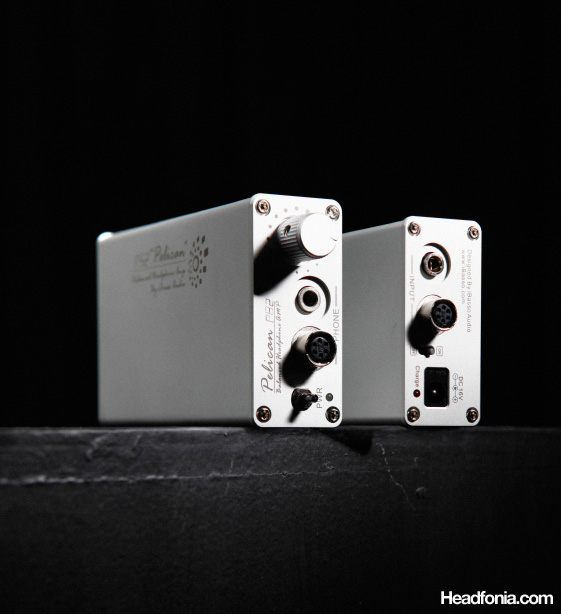
Here comes the new balanced amp from Ibasso! To counter RSA’s quad-mono SR-71b, Ibasso has created quite a monster portable amp in the form of the PB2. I’m sure you’ve all heard of it: 32 volts of swing and 2.5watts maximum output puts this portable in a desktop amplifier league.
IMPRESSIONS WITH FULL SIZE HEADPHONES
Of course the first thing I did when I received the PB-2 was to hook it to a Hifiman HE-6 to see if the rumors are true. Indeed it has enough power to drive the HE-6 to quite a good loudness level, and I’m only using the low-gain setting with volume control at 3pm!
While the PB-2 can never replace the impact and authority of a big desktop amp, the PB-2 can definitely take on a lot of entry level single ended desktop amps. For instance, listening to the HD650 in balanced, the PB-2 was able to grab a good control of the drivers, injecting a good dose of pace and making the HD650 feels lighter and more nimble than it normally is. I think in this sense the balanced drive really helps to pick up the pace of the HD650, as my Grace m902 ($1,500 headphone amp with single-ended headphone out) though having more impact and authority, doesn’t improve the pace of the HD650 as well as the Ibasso PB-2. Now that’s quite a compliment.
IMPRESSIONS WITH CUSTOM IEMS
With custom IEMs like the JH16Pro, the balanced drive gives an instant boost in soundstage size and bass quantity and you get a much bigger sound than you do when driving in single ended. However, I do think that while very impressive in short listening sessions, the balanced drive only increases the phase inaccuracy already inherent in the multi-driver IEM design. The balanced drive also didn’t improve things like articulation, detail extraction, imaging precision, or bass control out of the JH16, and again I will have to go with the Pico Slim or the RSA Shadow for my JH16.
OP-AMPS & BUFFERS
Opening the enclosure (Ibasso has supplied the hex key required to open the case), and I’m greeted with two rows of quad opamp arrays. It’s a pretty awesome sight to behold in a portable amp. The layout is very clean and symmetrical, as Ibasso had placed the messy part on the bottom side of the PCB. Ibasso also supplied an extra quad set of BUF634 buffers and an extra quad set of AD797 opamps, as well as dummy boards to bypass the buffer section. In total, you get 16 pieces of opamps/buffers along with the PB2.
Of course this is an incredible opportunity for opamp rolling. The PB-2 comes stock with the OPA604 op-amp and BUF634U buffer. The stock set up is actually quite good and has a very good tonal balance with good vocal presence, full mids and lows. Upon changing the opamp to the AD797, you get better bass control and more lively treble. When used in conjunction with the buffers, I felt that the midrange transition is not very linear when compared to using the OPA604 opamp. I prefer the AD797 without the buffer section, as it gives me the true AD797 sound.
My buddy Neob sent me a pair of dual-channel DIP OPA2111KP op-amps, which he said is a good pairing for the Ibasso P3, and indeed it is a very good opamp for the PB-2 too. The 2111 has a neutral presentation like the stock OPA604, but with a bigger soundstage and a more open sound. The treble is less agressive and also smoother than the OPA604, and so far it is the best match I’ve found for the PB-2. I haven’t quite tested the PB-2 with old time favorites like the OPA627, because I don’t have enough chips to fill in the quad-channel.
The buffer helps to add current to the output, which is useful for hard to drive headphones like the HE-6. But in terms of sound colorations, the buffer adds mid and low body, while lowering transparency. So, if I’m using the PB-2 with the 300 Ohm HD650, I’d rather have the buffer replaced by the dummy adapters as the amp runs cleaner without the buffers. Between the two buffers, the stock BUF634U is more neutral all around, while the DIP-package BUF634P WB (with the brown dale resistor soldered) is the same buffer running in high bandwith mode. The high bandwith BUF634 has 180MHz compared to 30MHz on the plain BUF634. For this reason, the BUF 634P WB is always the better choice for driving current hungry headphones like the HE-6, but keep in mind that battery life will also suffer tremendously (quiescent current averages 15mA vs 1.5mA on the low bandwith mode.)
As a recap, here is a general guide to the opamp and buffer configuration:
- OPA604 + BUF634U (stock configuration) – Neutral sound with good tonal balance.
If you want more treble, then go with the AD797 on the opamp section:
- AD797 + BUF634U – Better treble quality, drier on the mids to top compared to OPA604.
If you want more mids and low end body, change buffer to BUF634P WB (180MHz):
- Change buffer to BUF634P WB (180MHz) – Bigger sound, fuller bass and mids, shorter battery life.
If you want a more transparent sound and better texture on the bass areas, take out the buffer section and go with a dummy buffer.
- No buffer – Limited current, but still good for HD650, sound is cleaner and more transparent to the actual signature of the op-amp.

These are the opamps and buffers Ibasso included with the PB2. Left to Right: BUF634P (High bandwith 180MHz), BUF634U (Low bandwith 30MHz), Dummy adapter, AD797 (SOIC package), OPA604 (DIP Package).
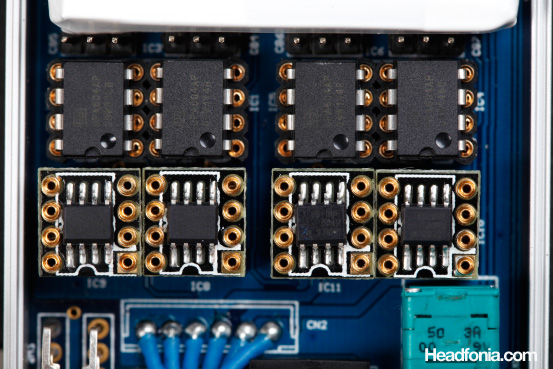
The default configuration. Opamps are on the top row, buffers on the bottom row. OPA604 (top row), BUF634 (30MHz) bottom row.
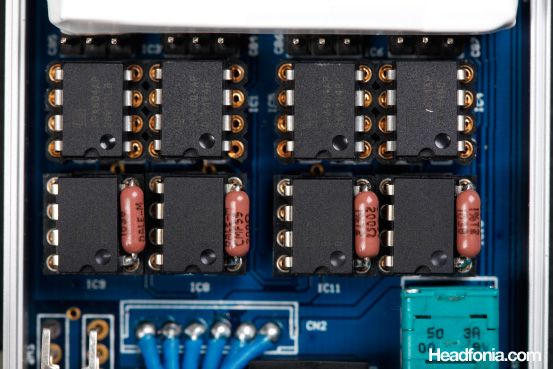
The stock opamp OPA604 (top row) with BUF634 (180MHz) bottom row.

AD797 opamp (top row), dummy adapters (bottom row).

Mounting dual-channel DIP op-amps (top row).
COMPARED TO THE PB1
Like the PB-1, the PB-2 has a very good build quality. I’m loving the new matt finishing from Ibasso, and I think it really looks good in silver. There are no sharp edges in the housing, finishing quality is very smooth, definitely Ibasso has improved their build quality a lot since the P2 days. I do have to say that the longer enclosure, though understandable given the power output, is a big turn off when I can be using much smaller amps like the Headstage Arrow or the Pico Slim. I think you’ve got to have a real need for the power output of the PB-2, otherwise it will make more sense to go with the other slim amp models. Another thing that’s preferable on the PB-1 is the placement of gain switch. On the PB-2, you need to open up the enclosure to get access to the gain jumpers, where on the PB-1 the gain switches are accessible through the bottom side of the amp.
Compared to the PB-1, the PB-2 has an almost identical sound signature and tonal balance. Ignoring the power output differences, the PB-2 on the stock op-amp and buffer sounds slightly warmer with less aggressive treble and more low end body, while the PB-1 has a better clarity on the treble area. When you take out the buffer and only run it on the stock OPA604 op-amps, then the PB-2 sounds improves the clarity on the treble to match the PB1 while still being warmer and more neutral.
(special thanks to Neob for the PB1 loaner).
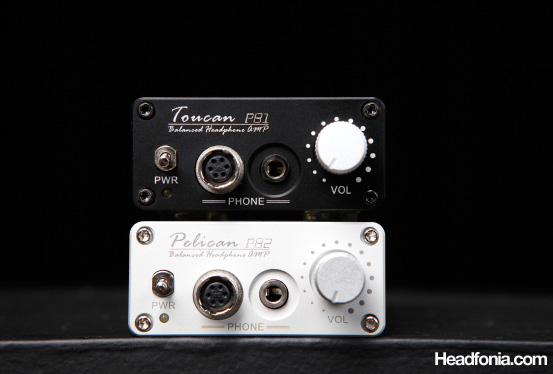
Comparison with the PB-1 (top), PB-2 (bottom).
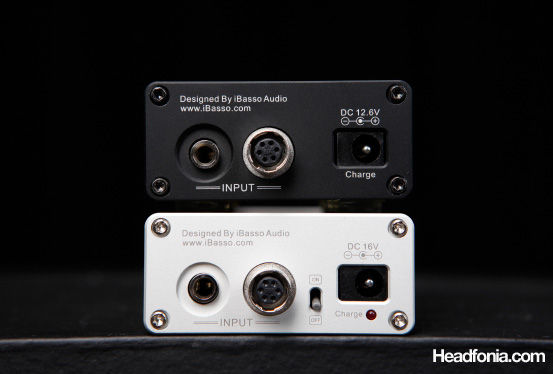
Comparison with the PB-1 (top), PB-2 (bottom).
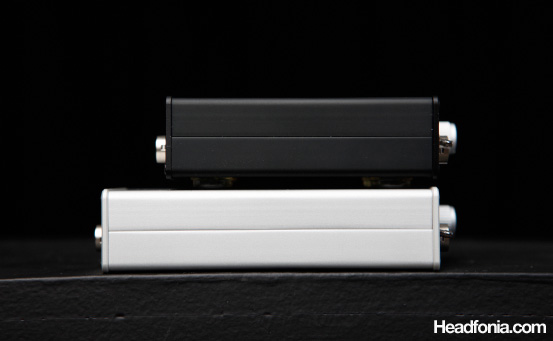
Comparison with the PB-1 (top), PB-2 (bottom).
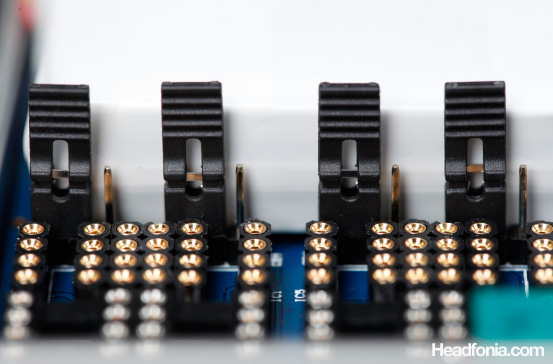
The gain jumpers.
END WORDS
Throughout my listening time with the PB-2, I almost never see the need to use the mid or high gain level, other than just testing how loud it can drive the HE-6 headphones. But for actual listening, I actually find the low gain to be enough even for the HD650 and the HE-6. With the HE-6, though the voltage swing is plenty, it didn’t quite have the authority to make a slamming bass impact. However, with the 300 ohm HD650, the experience is very enjoyable as the PB-2 is perhaps the most affordable amp I’ve tried with the HD650.
Set up used for review:
Headphones: Hifiman HE-6, Sennheiser HD650, JH16Pro
Source: Hifiman HM-602, HM-601, Ipod Classic
Amplifiers: Ibasso PB-1, Ibasso PB-2, HeadAmp Pico Slim




Svfoo123
Right now I am using a matrix m stage with hd 600. I was wondering what how you thought that compared with running the hd 650 through the PB2.
Thank you
Anonymous
Hi,
I made a short comparison to the Grace m902 in the article:
/While the PB-2 can never replace the impact and authority of a big
desktop amp, the PB-2 can definitely take on a lot of entry level single
ended desktop amps. For instance, listening to the HD650 in balanced,
the PB-2 was able to grab a good control of the drivers, injecting a
good dose of pace and making the HD650 feels lighter and more nimble
than it normally is. I think in this sense the balanced drive really
helps to pick up the pace of the HD650, as my Grace m902 ($1,500
headphone amp with single-ended headphone out) though having more impact
and authority, doesn’t improve the pace of the HD650 as well as the
Ibasso PB-2. Now that’s quite a compliment./
Likewise the part about pace and the more nimble HD650 also applies when
compared to the M-Stage.
Cheers.
George
Thanks for the impressions. The people on head-fi seem to think that the PB-2 is very close to desktop amps. Tell me, did you try it with any closed headphones?
Anonymous
In a way it’s very close to desktop amps, even in ways that my desktop amps can’t compare.
Please read the passage about the HD650 and the Grace m902 comparison — a lot of single-ended headphone amps will not be able to drive the HD650 with the same pace as the PB-2 in balanced, and this is probably due to the benefits of the balanced drive. But on the other hand, bass impact and slam is not quite close to the powerful desktop amps such as the Grace or even the M-Stage.
George
Mike, have you tried it with the DB1 balanced DAC so far? That would be a fully balanced setup. One head-fi, the word it that the differences with the DB1 and without are more pronounced with the PB2. Le t me know what you think.
Anonymous
No, George I haven’t tried it with the DB-1 DAC. You can read my review of the DB-1 in comparison to the other portable sources on the source page.
Cheers.
George
Thanks. I hear the combo sounds great.
George
Mike, glad to hear you will be getting an SR71B and comparing all the amps, especially the PB2. You came through yet again! I can can vouch for the SR71B’s strength with the HE6, as I have heard it. I felt it was lacking bass, but I had no prior experience with the HE6 and did not know the source and music etc. The clarity, speed, naturalness, and mids and treble were all fantastic, and I really loved the soundstage and imaging, despite the imaging being pretty inaccurate as you have noted. It was still big and real, which was what I liked.
Anonymous
Awesome! I was surprised about the lacking bass part, as RSA Amps are
known for their bottom heavy signature (and all of the RSA Amps I have
over here have that same signature).
A good headphone will still have a great imaging, it just is not as good
as in single ended.
George
As I said, it was not my music and source, and I had no experience with the HE-6. I am pretty sure the SR71B is not bass light, as all the review I have seen have said so. I am probably going to listen to that combo again next month, and i will let you know what I think.
Anonymous
I ve received the SR71b. The sound reminds me a lot to the Protector. It doesn’t drive the HE6 as loud as the PB2, mostly a function of voltage swing. But I felt that the bottom heavy signature pairs with the HE6 better.
Andrew Prasetyo Jo
Does a DAC needed in this case when using PB2 ?
Another question would be, have you compared PB2 with iBasso D6 which is a DAC/Amp?
Thanks
Anonymous
A DAC is needed, yes. You can also use an Ipod.
I’ve compared the PB2 to the P4 Warbler, but not with the D6.
Andrew Prasetyo Jo
i’m thinking to get a PB2 for the amp since i think that will last me for quite a while in the 300$ range. however, on the DAC area, i’m still unsettled.
HRT Music Streamer seems to be a good candidate, but some other suggest me a ZERO DAC or ibasso DB1 since the combo with PB1 seemed to yield good result.
please enlighten me with your suggestion.
Anonymous
What are you building the set up for? You want to use a desktop DAC with the PB2?
What headphones are you using now ?
Andrew Prasetyo Jo
my setup would be macbookpro > DAC > amp > currently using ATH-AD700. Other than that, i’d probably go with iphone > amp > HD-280pro for more portable.
I do have Denon AVR 591 AV receiver if that might be a good source.
I’m currently looking for an upgrade of my ATH-AD700. Not sure which direction yet, but looks like Sennheiser HD598 or HD600 might be a good choice. I own HD555 and it feels that i lack the clarity in it. much prefer the AD700.
Anonymous
If I’m not looking for a particular sound, I’d just go with a simple one box set up like the Yulong U100. It sounds great out of the box, and it’s very convenient to use. Unless you have a real reason to go balanced (which I don’t think you need, with the AD700).
Do you have a problem with the bass on the AD700?
Andrew Prasetyo Jo
The bass on AD700 is very slim. I currently use PA2V2 amp made by Gary(Electric Avenues) which cost me 60 bucks, but helped the bass to become more fuller.
I’ll try yulong and see if that’s sufficient or not.
Thanks for the suggestion.
Anonymous
Oh, the Yulong won’t help you with the bass. Generally if you stay within the AD line, you won’t get much change on the bass. What you need is a different headphone. I think the HD600 is a good idea.
Anonymous
I think I tried it with the Sony Z1000 briefly.
Earfonia
Please reserve some space for update on Op-Amp rolling 🙂 When there is chance, let’s try it with other Op-Amps 😀
Anonymous
Of course 🙂
FLACvest
Thanks for helping me choose between the D12 Anaconda and the PB2 Pelican. I’m sold on the Pelican now. I was a bit leery of dealing with Balanced and getting stuff recabled, but the quality is obvious in balanced mode per your review and the device looks stunning and is set up very very logically. I’m excited!
Anonymous
That is cool. I am glad the review was helpful to you.
Sinan
Mike two questions please:
1)Does PB2 makes same hissing sound with volume knob?
2)Would there be difference in sound characteristics in low-high gain, or is it just volume?
Thanks,
Sinan
Anonymous
Good question! I actually forgot to address those issues in the article.
1. No more hissing sound on the volume knob. However, I do think that
this may be a case-by-case scenario, one pot may make the noise, while
the next one may not.
2. Of course. Low gain always give the lowest noise floor, blacker
background, cleanest separation. High gain gives a slightly more dynamic
sound, more punchy, more lively.
Cheers.
Ubik
Hello ! 3 questions please.
Where is the position of the PB2 between the others amps (alo rx, pico slim, ttjv, lisa III).
And the synergie with hd650 and hm601 it’s good or not ?
Is it enough good for fully exploit the hd 650 ?
Thank you
(sorry to ask always same question but I will soon take my futur installation)
Anonymous
Hi Ubik,
I can’t quite rank it like that. Amplifiers come with different characteristics, and what you need to do is find a good match with your prefernce and music.
Roughly, here is a short guide:
PB2 – balanced drive, very powerful, fast paced.
Lisa3 – powerful, single ended, mid and bottom end heavy.
Pico Slim – good for IEMs, excellent detail and articulation.
Alo Rx – grain free, very widesoundstage, lively
TTVJ – good detail, clarity, midrange body.
To fully exploit the HD650, you need a good balanced desktop amp like the Beta22.
Ubik
Thank you again for your reactivity.
But for you what is the better nomad amp with a hd 650 and an HM 601 ( the two are dark).
Ubik
Always nomad amps mingled.
Anonymous
Go with the PB2 then.
Ubik
Thank you ! That is I found it very pretty this PB2. But have it better in the details than the alo rx because I have a freind who advise me the alo rx ?
Result the reputation to Lisa III is overused.
Anyway, I am very intersting by your futur comparatif with the ibasso and the other amps.
Anonymous
Yes, you can also go with the ALO Rx. That should help to add treble to the HD650.
jeffreyfranz
Thanks, Mike. Oh, boy, what a great and cost-effective option for the HD 650, especially for those, like me, who want to experiment with running balanced.
Anonymous
Indeed it is cost effective. If you’re using the HD650, which is not very current hungry, you can also use the PB-1 as it have enough voltage swing for the HD650. The PB-2 will only give you the benefit of opamp rolling.
jeffreyfranz
Mike, my main interest in either PB1 or PB2 would be to “pick up” and add life to the HD 650s via balanced drive (You said: “injecting a good dose of pace and making the HD650 feels lighter and more nimble than it normally is”). The HD 650 is just too dark for me. I would, however, also want to be able to drive my AKG K701 (60 Ohm), which has a rather opposite signature. All things considered, could you steer me one way or the other? Thanks.
Anonymous
Hi Jeff,
The PB-1 and PB-2 has an almost identical sound signature. For the HD650
and the K701, I’d rather use the PB-1 which I find has a cleaner sound
stock compared to the PB-2. With the PB-2 you get to do opamp rolling
and you have a higher current output, which you don’t need with the
HD650 (and probably the K701 too).
If the HD650 is too dark for you, again driving it with a balanced drive
is not going to turn it into a brighter headphone. It will make the
HD650s’ pace faster, more nimble, less slow, but it’s still primarily a
dark headphone.
As for the K701, I haven’t tried it with the Ibassos, but if I’d have to
pick, I’d probably use an RSA amp for the K701, simply to add bottom end
body.
jeffreyfranz
Oh, Mike, it was you. I got this message via email. As I responded in a Reply, thank you so much for the helpful response. Headfonia is the best!
Anonymous
Cool.
Thanks for the compliments too. 🙂
Suhayb Hafiz
Awesome review. Keep up the good work. Two questions
1) Would the PB1 have enough power to run 600 Ohm DT880’s? PB1 is cheaper (Student budget).
2) Would the sound signature of the PB2 be better suited for DT880’s or the PB1? Is there a significant difference?
Anonymous
The PB-1 should have enough power for the DT880. What it needs are voltage, and the PB1 has plenty of it..
The PB-2’s signature is similar to the PB-1, but you can roll opamps with the PB-2.
I think it is better to find a darker sounding amp to match with the DT880.
eagle1776
So in response to some of your comments… Do the PB1 or PB2 outdo desk amps in the same price range? I understand they don’t have the authority of a >$1000 amp but what about that <$250 range. Someone on Headfi was saying they preferred the PB1 to the Schitt Asgard for the HD600. Is it possible I can choose portability and sound just as good at that price range?
Anonymous
I have never listened to the Asgaard so I cant say.
The PB2 is very powerful for the price, that without a doubt. But there are other parameters to judge an amplifier by, like resolution, refinement, etc.
Jason
Would you recommend this over the Protector? Do they sound similar?
Anonymous
The protector follows the sound signature of the RSA amps which is quite different from the Ibasso amps.
You can read more about how they compare on this article:
http://www.headfonia.com/the-usual-suspects-12-portable-amps-compared/
Underpinkmoonlight
Would you recommend thisfor B&W P5?
Anonymous
It wouldn’t be a bad pairing, but I don’t think you need a separate amp
for your B&W P5, let alone something as big as the PB-2. If you want to
give the Ibasso a try, the PB-1 should be sufficient. The sound
signature is identical to the PB-2 but with slightly less power (still
more than enough for your B&W P5).
http://www.headfonia.com/ibasso-pb1-toucan-unboxing/
Vainkid
Hi mike just wonder how does this pb2 work with closed cans like hd25-1 ii?
Thanks
Anonymous
It works nicely. Sound signature pairing wise, I’d prefer a darker sounding amp for the HD25-1.
Vainkid
Any suggestion? Thanks bro cheer
Anonymous
There are plenty. Please read the portable amps comparisons articles.
http://www.headfonia.com/the-usual-suspects-12-portable-amps-compared/
And
http://www.headfonia.com/music-on-a-budget-sub-100-portable-amps-shootout/
Anonymous
The PA2V2 is not a dark sounding amp, but somehow the pairing is great with the HD25-1.
http://disq.us/335q3h
DT_MS
Hi Mike would like to ask how does this compare to uHA-120 in terms of pairing with Sennheiser HD-650?
Anonymous
Hi,
I didn’t review the uHA-120 (Lieven did) and so I would answer this based on my experience with the AHA-120 (the bigger version of the uHA-120).
In terms of refinement the JustAudio amp is much superior than the Ibasso. The Ibasso PB-2 however currently ranks as the most powerful portable amplifier in the market (at least the ones I’ve tried). However with the HD650 you don’t really need that much current to begin with and so I don’t think you really need to go with the PB-2. Even something like Ibasso’s own P4 would do a better job with the HD650 since it’s a more refined amp than the PB-2.
barun
Hey Mike,
Had a question. Can I use headphones with 3.5mm jack to attach with the HR10A 7P 6S adapter to get connection from the balanced headphone output of the PB2 amp?
Thanks
Mike
Barun,
I wouldn’t recommend that since you’ll be shorting the inverted signal of the balanced out. Besides they supplied a 3.5mm output so I don’t see why you need to do that.
barun
Thanks for the info. So do you think that the 3.5mm output from the PB2 will be enough to power a 600 ohm AKG K141 and 300ohm Senn HD250 LII?
Regards
Mike
I think so, yes. Just set the gain on high.
barun
Thanks. Will be using it to power an ortho as well, called TDS Echo 16 Kiev, which gets distorted with the cMoy amp, although it has impedance of 16 ohms (inefficient?). Anyway thanks again.
Cheers 🙂
Mike
Ummm…
Thing is the PB-1 is powerful enough for most orthos, especially the older ones that tend to have smaller drivers. It would be best if you can reterminate the headphone to a balanced plug so you can get the full power output of the amp.
The PB-2 is more powerful, but you shouldn’t need it except for things like the HE-6, which the PB-2 still can’t drive adequately anyway.
The Cmoy design is quite weak on current so I’m not surprised it distorts your TDS.
Mike
On second thought you don’t even need the PB2 for those 600 ohms dynamics. The PB1 should suffice.
barun
Hi Mike,
Just got the PB2, had a question? How do I change the gain settings. If you can tell me how to get the highest gain settings as I can barely hear anything from the 600 ohm K141 and T1 with the full volume.
Mike
Barun,
Take a look at the last photo on page one. You have to open the casing and change the jumper position.
barun
Yes I did that and there seems to be very little change in the sound. Although when I am using it with my pc/laptop I’m getting it to sound a lot louder then a phone/ portable player.
Mike
That doesn’t sound right. There are four different gain stops, you’ve tried the loudest setting?
barun
I’m using the same settings you’ve used in the above jumper picture with the only exception that both the right jumper are exactly inverse of the left jumpers. That is the loudest sound I’m apparently getting from the jumper distribution.
Mike
Phew. I don’t know what’s up then. Try asking Ibaso for a replacement?
Timothy
Dear MikeI have been reading your articles and really changed my poin of view… thanks to you i now have a better understanding in Hifi stuff.but I still need your opinion regarding things i need to buy. as what I need is mostly to practice on my bass guitar silently, listen music from my iphone 4s.and I already have shure se535 for my daily use.and now i’m searching for a practice headphone that can give deep, low clarity sound of my bass, without a distortion when i slap or picking it.i like to hear and play my bass in these genre: pop, rock, funk, a bit of jazzstill confused with what should I choses to buy I narrowed it down to some from your articles;headphone: HIFIMAN HE-500, sennheiser HD650, and ultrasone pro 900amp : fiio e11 , ibasso pb-1/2 (ready on near store)please help me with this matter.. if you have another recommendation please just tell. dont want to get overpriced nor doesnt find my expectation.thank you
Mike
Tim,
I’m probably not the best guy to answer this, but if you have a guitar store in your town, it’ll be best for you to stop by and test them out.
Personally on the top of my head I’m thinking of monitoring headphones like the Shure SRH-940 or the Beyer DT770.
Timothy
I finnaly buy the audio technica pro 700mk2 50 years edition (the store clerk persuade me to buy it… ) but turns out it is a good one, suits me.
Also already try the ibasso PB-2 with it. But I kind off not like the combinations between those two. It doesnt add more quality as the PB-2 with other headphones.
Can you help me with this matter?
Is there any other choice of portable amps? I also try the pico amps but forgot what series. But it also doesnt give much changes on the pro700 quality..