




Ultrasone’s Edition 10 flagship headphone has made it to our test labs, thanks to our friend Onny who contributed his headphone for evaluation.
S-LOGIC AND SOUNDSTAGE
Being the first open-designed Ultrasone headphone, the Edition 10 gives a refreshing breath of open-ness in the sound. The S-Logic effect sounds more natural than the other models, most likely due to the open design. I’ve always felt that moving between S-Logic and non S-Logic headphones require some adjustment of the soundscape presentation, and it happens that a lot of people can’t quite adjust to the S-Logic, which leads to a lot of mixed reviews on Ultrasone headphones. In this sense, the Edition 10 soundscape presentation is much easier to adjust to, as it doesn’t have the typical shortcomings of a closed headphone design. Ultrasone should’ve made far more open designed headphones in their line-ups, as that would do wonders to their S-Logic technology.
The Edition 10 matches well with well recorded live recordings, as the driver is able to re-create a very real and enjoyable soundscape with those recordings. I went back and forth many times between the Edition 10’s soundstage presentation to the Sennheiser HD800’s, and I can’t quite decide which is the better one. The presentation is quite different, where the HD800’s puts you more in the zone, where the Edition 10 is like sitting further back and yet still into the music. The HD800’s soundstage wraps around your head and puts you in the center of the image, with a very good center focus. The Edition 10 is more like a very clear image that’s been projected within your head. Whatever it is, Ultrasone really should make more open-designed S-Logic headphone.
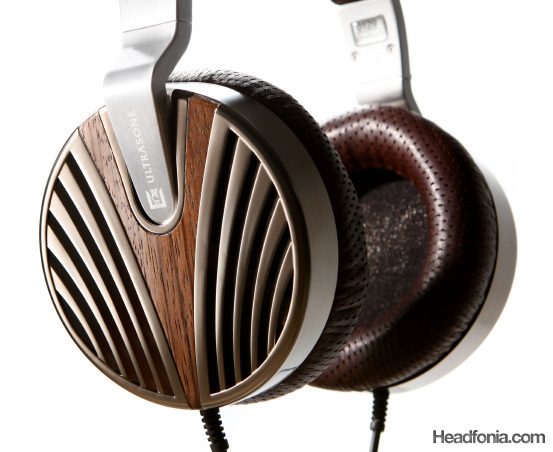
“The Butterfly”
GENERAL SOUND
The tonal balance is definitely on the bright side, and perhaps the second thing you’ll notice upon listening to the Edition 10 is how its treble has very strong tendency to sibilance. The Edition 10 boasts of its clear reproduction of the music, which I feel to surpass the HD800, and matches the HE-6 clarity very well. Unfortunately, I feel that one of the thing Ultrasone did to enhance the perception of clarity and detail is by boosting the treble level of the Edition 10. I really didn’t think they needed to do this, as the driver in itself already performs very well even without the upper treble boost. By doing this, Ultrasone has pretty much limited the use of the Edition 10 strictly with classical music and audiophile recordings. With mainstream recordings, even one that has modest treble levels like U2’s Joshua Tree, it’s hard to listen to the Edition 10 as heavy sibilance is present at almost every moment. Even on amplifiers like the Burson HA-160D or the Zana Deux, the sibilance level is still quite annoying. So, it’s a pretty annoying flaw that I’m hearing here.
One of the aspect that I really like is the lack of grain in the sound, which is a total opposite of the HD800’s. Having no grain in the sound results in a very clear view in the music. I think this has always been the tradition of Ultrasone drivers, as the majority of their headphones always have very low grain levels. This is comparable to the Hifiman HE-6, Stax Omega 2 or the Audez’e LCD-2 in that they all have low grain levels. Since the Omega 2 and the LCD-2 has a relatively dark tonal balance, both headphones doesn’t flaunt the apparent impression of clarity as well as the HE-6 or the Edition 10. And between the HE-6 and the Edition 10, the Edition 10 is even higher on the clarity scale, mostly due to the higher proportion of treble levels.
Moving down to the midrange area, I generally like the clean midrange presentation that’s both sweet and yet clear. The transition from treble to mids to bass is fairly linear, and the midrange also doesn’t feel thin or recessed. There isn’t much coloration in the midrange and the midrange is generally quite straightforward, but it all sounds quite sweet and far from dry. When the recording is warm and thick, the Edition 10 will let that warmth out. In comparison with the HD800, the Edition 10’s mid is less mellow and less grainy, but but it also doesn’t have the forward mids of the HD800. With proper recordings, the vocal presence is better on the HD800, but on some mainstream recordings, the HD800 can be overly forward. Again the lack of grain in the sound is very appealing as it produces a very clean midrange area. Perhaps the midrange is most similar to voicing of the the Hifiman HE-6’s midrange, in the sense that it has a clean sounding mids with good clarity, and without a sense of dryness.
The bass punch is quite good, but nowhere as good as the Audez’e LCD-2, but I’m enjoying the bass more than on the HD800 and the HE-6. The punch is fat, round, and also tight. The bass texture is also very good, as bass details remains very clear and is quite above the HD800 and the HE-6 in this respect. The Edition 10’s driver is able to make the bass appear quite distinct from the other instruments, as if I had the bass playing from a separate subwoofer, but without the phase delays. On some recordings, the bass can be slightly boomy, and though it will sound unimpressive on a review, but the reality is that the Edition 10 bass is generally fun and never feels lacking. Low bass is quite good, but I’d put my money in the LCD-2’s low bass performance. Overall, the Edition 10 would be a pretty kickass headphone for electronica, if not for the lingering sibilance issues.
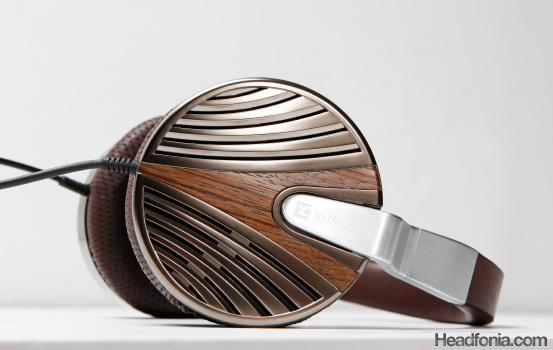
Ruthenium finish creates different gloss under different lighting, yet it’s also a fingerprint magnet.
ERGONOMICS
Ergonomically speaking, the Edition 10 is among the best. The luxurious Ethiopian sheepskin leather pads is very comfortable for long term listening, and is far less sweaty than the leather pads of the LCD-2, the Omega2, or the HD800. The weight feels very light on the head, lighter than the HD800, and roughly the same as the Omega2. The headband design, which looks like it’s been pulled from the Edition8, is a weak point in my opinion. While this headband was fine paired on the Edition 8’s smaller pads size, and the strong clamping force acceptable for a headphone that’s bound to be used portably, it’s not quite a good fit for the open-designed, big diameter size Edition 10. What happens is a pressure point on the area above the ears, and while the pressure is not too uncomfortable, it fell short from the comfort levels of the Omega2 or the HD800. The round pads is fairly large, but like with all round pads design (Hifiman HE-6, Beyerdynamic T1), my ears rubbed with the inside pads, and so I prefer oval designs like the Omega2 or LCD-2 better. In all, the Edition 10 is very comfortable, but I felt that they could’ve designed a new headband to make the comfort level on par with the Omega2 and the HD800.
BUILD QUALITY
I feel that the headband is the most solid part of the Edition 10. The actual Ruthenium covered housing may look quite metallic in photographs, but in reality it feels more like a plastic with a faux metal finish, and the material doesn’t feel as high end as the Beyerdynamic T1’s and the Stax Omega2’s housing, both of which are made from real metal. Although the Edition 10 is very lightweight, it doesn’t inspire as much confidence as the built of the HD800 or the Stax Omega2. I certainly don’t put too high of a score in the housing quality. The Oxygen-free silver plated copper cable with Aramid fiber is also less convincing in person than the cables of the other flagships. Although the Beyer T1 and the Audez’e LCD-2 used a generic third party cable, both their cables are thicker and feel more well built than the Edition 10’s. Briefly, I thought that the cable uses a Neutrik 1/4″ TRS connector, like the T1, HE-6, and the LCD-2. However, on second look, it’s not a Neutrik. Opening the jack, I was not that impressed with the build quality, and I discovered that the cable looks like a typical microphone wire, with two cores for signal and the sleeving used for ground. This probably means that there is a soldering joint in the Y-split. While I won’t make a big deal of the cable, I do think that the Edition 10’s cable build quality is not as good as the other manufacturer’s flagship.
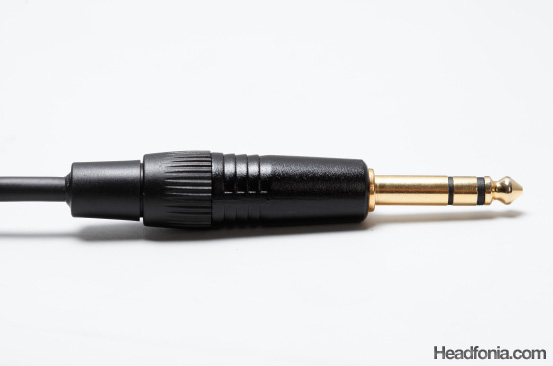
1/4″ jack looks similar to a Neutrik at first.
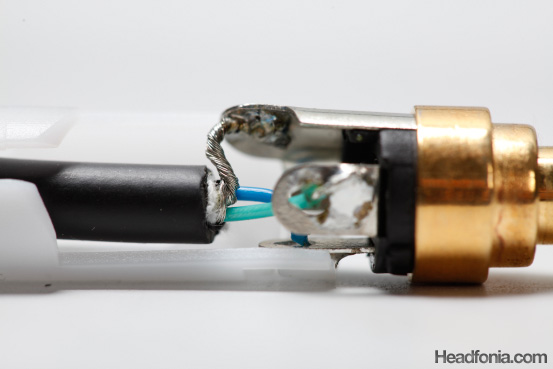
Cable quality is a bit disappointing for a $2,600 flagship.
END WORDS
The Edition 10 does have an enjoyable sound with a good tonal balance, mids, and bass, aside from its high treble issues — which is a big turn off for me. Overall, the Edition 10 comes with a lot of strong points. The voicing reminds me a lot of Hifiman’s HE-6, only a little brighter, but far more comfortable and easier to drive. And just for the record, the Edition 10 sounds just fine straight out of an Ipod. And while tolerance to sibilance differs from one person to the next, but in the case of the Edition 10, I think it’s going to get in the way of people’s ability to truly appreciate it. But as I’ve said, the implementation of the S-Logic is the best so far, and it would be very interesting if Ultrasone decides to release another open headphone to the market. An open Pro900, perhaps?
Gears used for review:
Headphones: Ultrasone Edition 10, Sennheiser HD800, Hifiman HE-6
Amplifiers: Burson HA-160D, Zana Deux
Source: Burson HA-160D, Onkyo ND-S1




Mark
already has open pro 900, i think pro 2900 suppose to be the open pro 900
GreyArea
Yeah, you're right, the 2900 is the open version of the 900. http://www.ultrasone.com/index.php/en/products/pr…
There's the HFI 2400 too, that's the open version of the 780. http://www.ultrasone.com/index.php/en/products/hf…
Mike
Thanks, guys. I was shocked when I read your comments. I was like ??? because I remember reading this on the Ultrasone website:
"The Edition 10 is the first OPEN-BACK pair of Edition headphones by Ultrasone. The wings of a butterfly inspired the basic look. "
I guess I missed reading between the fine print…
😡
Garmt
Yes, first open EDITION headphones… Not the first open Ultrasones ever…
Allen
oh…my…GOD
@JotaIGz
You know Mike, I think you could be the most envy-able person on head-fi :p
Mike
Probably. 🙂
Nah, there are a lot of people with way more headphones than me. 🙂
Kunal
That was a nice write-up Mike,keep up the fine work 🙂
Mike
Thanks, man. 🙂
Dynamic74
I suspect the edition 10 you tested suffered from the 'midrange' issue described in head-fi due the faulty ear-pads. According to Ultrasone dealer in the US, it can be returned and serviced by Ultrasone.
Mike
Thanks for the info, Dynamic74. 🙂
Mike
I guess the question that everybody is asking is: "faulty pads on a $2,600 headphone?"
o.0
Dynamic74
The new ear pads really does make a difference in the sound quality of the headphones. Roughly 20% to 50% better.
Anonymous
Can you elaborate more? 20-50% is a big number. I would be surprised if
I can get 20-50% improvement on my current system.
Dynamic74
The improvement to the treble is the most, the cymbals no longer sounds tinny and lifeless and the sibilance is reduced to a point where it only appears in bad recordings. The treble is still a little on the bright side. The bass also improved by quite a bit and the mids improved just a little. The overall sonic imaging also changed to be more lifelike and 3D. You got to experience it yourself in order to notice the difference. I never expect a ear pad change to do so much wonders, it really change the character of the Edition 10.
Anonymous
Thanks, that is very refreshing to know. Pads should make a big difference as it is a big part of the acoustic chamber in a headphone.
jendol
enjoy your review mike
Mike
Thanks!
rap
cable quality is always bad for ULS 😀
Mike
Yes, and even more for their $2600 flagship.
jlingo
Great Nice Honest Review! Thank you! I had a chance to listen to Edition 10 and yes I noticed the treble and sibilance quite a turn off. I'm still enjoying my Edition 9.
Mike
Thanks, jlingo. 🙂
A Ruskie noob
This just confirmed my fears. I got this as a birthday gift in Dec and my most expensive headphone before that was sennheiser pxc450 (the large noise-canceling one), so I was puzzled by the Ed 10’s unbearable hissing thinking “this thing is so expensive so it has to be the result of how it brings out all the faults in the recording… this is what a true hi-fi headphone sounds like… wow…”. But now I see that the King is simply naked.
Yet, lossless .aac jazz and classical, like the author promptly noted, sound absolutely fantastic! (well, compared to my trusted pxc450’s, anyway:) Which I guess means I should start saving up for a more omnivorous pair…
I also completely agree that the cord looks and feels very cheap. But the headphones look so Jugendstil-gorgeous on that stand so they are instantly forgiven. Jazz and classical it is, then!
.aac via MacMini/Meieraudio Symphony.2/Ultrasone Ed 10
Anonymous
That’s a good post man. 🙂
SPW
What a terrific, no-nonsense, concise and straight to the point writeup. This is more effective information communicated here than every other professional review I have ever read.
Anonymous
Thanks for the kind words.
eugenius
The connector is an Amphenol. Very good, better than Neutrik IMO. That’s what I use. 🙂
And the black PTFE covered cable … yes, they should have gotten the wool from the ethiopian sheep and made a nice wool covered silver cable. 😀
Anonymous
Amphenols are overrated, man. Neutriks are better. 🙂
eugenius
Erata: the connector is a lower end Neutrik OEM or a clone of one. 🙂 My amphenols look different ….
Jon
Do you think you could give a more in-depth review vs the LCD-2/HE-6/Stax in the future? There’s just not enough detail in this review and given the price premium, it seems to just be “slightly* better in some areas and lacking in build quality. However, this headphone looks. very nice. from pictures. I would love more comparisons before pulling the trigger. Looking forward to it!
Anonymous
Hmmm… understand what you mean Jon. Let me think about it.
In the mean time, if you have any particular question, feel free to post it. Perhaps I don’t have the time to do a full scale review, but I can definitely help answer some questions you may have.
Rudi0504
Hi Mike, I like to read your review, it’s very clear and informative to me, before I bought Headphone, IEM and Portable Amp.
Last week I was confuse to choose whether ED 10 or Ed 8 Limited Edition, My decision came to Ed 8 LE, because ED 10 in MID was to much sssssss and the HIGH was the same to my ear
If you see in Head Fi : Ed 10 with the Serien Nr below 500 have problem with the Pads , but you can claime to Ultrasone, they will replace the Pads for you.
cheers
Anonymous
Hi Rudi,
I have heard about the replacement pads. Hope it really corrects the issue.
Cheers.
Pomoika
Further to my previous comment below, I have now had my ED10 pads replaced.
Wrote to Ultrasone after hearing about the pads replacement offer in the US. They shipped replacement pads to Russia within a week by courier, had them replaced very quickly at their local service center, all free of charge.The sound is dramatically better. I must say that I am very impressed with Ultrasone’s prompt and professional service, which generally is a rather rare commodity in Russia. They guys do stand by their products.
Anonymous
Thanks, Pomoika.
The new pads sounds like the real deal.
Anonymous
Thanks, Pomoika.
The new pads sounds like the real deal.
Udaygroup6
Uday Group took off by Marketing / Indenting for two leading Cable, PTFE/TEFLON Cable, UNINYVIN CABLE/NYVIN Cable, RUBBER CABLE/SILICONE Cable & Wire Manufacturers in India.
UNINYVIN CABLE/NYVIN CABLE
RUBBER CABLE/SILICONE CABLE
PTFE/TEFLON CABLE
for more details visit http://www.udaygroup.com/
taegyun36
hey Mike, thanks for the great review!
I’m thinking of buying hd800 edition10/8 or d7000 and mat be HE-6 but right now I’m in a position where i can not try them all in person so I want to ask you a favor the which one would fit to me.
I usually listen to indie music with acoustic/ women vocals like Mariah carey and classical music especially love the sounds of piano,violin and oboe
what do you think i should do??
Mike
I think the HD800 would be the best choice given your music choice. The HE-6 would be second best.