




So, now you’re confused. You want something that’s warm sounding like the Sony, but also with the transparency of the Imod. Surprisingly, the chinese DAPs were able to combine the best of both worlds.
I find the two chinese DAPs, to be more “audiophile” sounding, despite their overall limitation as a player. The chinese DAPs gives you the detail, the soundstage, the resolution of what the RWA Imod is capable of, and more. If I can simplify, the chinese DAPs have very good technicalities while still remaining very musical. If you ignore the storage capacity, the less robust UI, lack of support, et cetera, the chinese DAPs are very very good sound-wise.
Between the two, the price difference between the Teclast T51 and the Hifiman HM-801 is rather huge. $790 for the Hifiman HM-801, and roughly ~$150 for the T51. Where does that $600 difference come from? Let me give some overview between the two players before moving on to the sound.
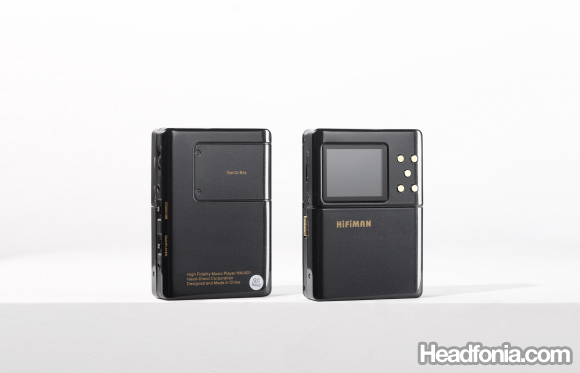
The HM-801 is an ambitious project by Head-Direct. This is the same people who’s produced the superb HE-5 headphone, the RE0 and RE2 earphones, the Jade electrostatics, and some amps like the Minibox and the Hifiman amplifiers. So, Head-Direct is already a known player outside of china, and when the announcement of the HM-801 was made, people got really excited about it (reading the spec sheet, at least).
The Hifiman HM-801 was designed from scratch to be THE audiophile DAP. Head-Direct wasn’t playing around when they designed this. It’s equipped with a high end Burr-Brown PCM 1704 digital to analog conversion chip, the same stuff you find on desktop sources. Though the version we use has the better quality 1704UK chip, I heard that the later version ships with the 1704U chip (This is not confirmed by Head-Direct though). The amplifier section is handled by the famous OPA627AU chip. It comes with a removable amplifier module that you can upgrade to in the future. While the basic HM-801 sells for $790, I believe a version with the upgraded amp will sell for closer to $1,000. A lot of money for a portable player it may seems, but if you compared it to a proper Imod set up (with the dedicated LOD), and a good portable amplifier, they come out to roughly the same $1,000 figure, or more. And the Hifiman still comes out better as it has a better DAC section.
The HM-801 is the only player in this comparison that has the ability to play 24bit files. Now, I’m sure that 24bit files are nice, but again, since the other ones don’t have that capability, I’ll be testing the HM-801 with 16bit .wav files. With such a good DAC circuitry, Head-Direct equipped the HM-801 with a coaxial and USB digital input. Thus, the HM-801 can function as a stand alone DAC that will process 24bit files. I did compare the HM-801 as a stand alone DAC to the internal DAC on the $1,600 Grace m902. The HM-801 was connected to the MacPro through USB, and the Grace was connected through the optical link (the Grace’s USB DAC implementation is not very good). Although I didn’t listen to it for too long, but during the short listening time, I do feel that the HM-801’s DAC is on par with the Grace m902’s DAC. Now you’re starting to feel that this $790 is worth the pricetag.
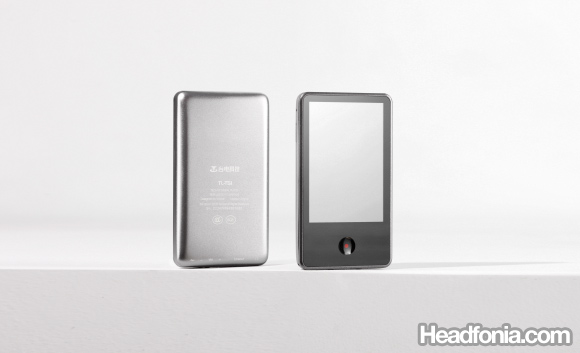
The Teclast T51 is actually sold only in China, and everywhere else outside of China most probably buys the MP4Nation’s rebranded version, that’s called the Nationite S:Flo2. Neverthless, they are two identical players except for the rebranding. Unlike the Hifiman, the Teclast or the Nationite name is not very well known in the international circle. And so, people was kind of sceptical at first, but the low price of the Teclast eventually lure people to try it out. The T51 is by far the cheapest priced player in this comparison. The 16GB model sells for $159.50, the 8GB model for $129.50 (currently sold out at MP4Nation), and a meager $109.50 for the 2GB model. I really don’t know how these people make money. The Teclast are ridiculously cheap.
The overall package of the T51 is actually quite good for a chinese made player, and even though it still has UI issues, at least it comes with a nice and big touch screen display, with an overall dimension that’s only slightly longer than the Ipod Classic. It’s also fairly light weight, perhaps a little lighter than the Classic, and the plastic housing makes more sense than what Apple did in the Ipod (for something that you will be carrying around in your pocket every day). Like the HM-801, line out signal is sent through the 3.5mm connector, and so it doesn’t require you to make a dedicated LOD for it, like the Sony or the Ipod do.
The T51 uses dual Wolfson WM8740 chips to do the digital to analog conversion. One chip for every stereo channel. And while people are debating the merit of having a dual chip configuration, we prefer to stay away from the debates and go straight to the listening impression.




[email protected]
This can be very good. I needed pictures to add in my school challenge and also the design you might have posted are excellent. Thanks for them chum! I guess teacher will really enjoy my venture due to these illustrations or photos and certainly the information I furnished.
Mike
Hi Robbins,
Glad we can help you with your school assignment.
2
i was looking for a review like this thanks!!!
i am using ipod 5.5 diymod now after reading this review i want to go for hifiman but its price is very high for me:(
Mike
If you're using a portable amp (and some of them are fairly expensive), you can sell both the Ipod and the Portable amp to help finance the Hifiman. 🙂
Otherwise, the Teclast T51 is very good sounding, as long as your music isn't bass-heavy.
jendol
good review mike, I have listened to hd800 paired with rwa imod, but never thought about pairing it with hm801, now as I do that pairing I must say I am impressed
Mike
Yes, the HM-801 really works well with the HD800 doesn't it? 🙂
inyuret
Awesome review man.
Mike
Thanks. 🙂
Jraff
As a Chinese,i am so glad because Chinese products become better.
After read your passage,i really want to buy a T51.Good review.
PS:T51 also spoken highly in Japan.
Mike
Yes, the T51 is very very good, and I’d highly recommend it.
hitmanx
Your review has been translated into Chinese and posted on a Chinese DAP forum:) (http://bbs.erji.net/read.php?tid=857262) And you did actually set quite high values on T51 and Hifiman-801 models rather than the well-known iPod and Sony X-series, that's not a common review.
Anyway, good job! I like the delicate photos:)
Mike
Wow, thanks for the info.
I'm glad the review can be useful to the audio community. I'm also glad that we're getting more exposure. 🙂
Mtktcl
But from the bbs.imp3 in china
more people like x1060 than others
Mike
Hi. The X1060 does sound good, and it does have quite a huge following.
Alan
Hi Mike, can you comment on any of these players with AT W1000X or JVC DX700? I am highly considering the T51, but the 801 is a distant 2nd, but obtainable.
Thanks!
Mike
Hi Alan, the T51 is great, but if you're using something high end like the W1000X, I would suggest you go all the way with the HM-801. I've never heard the DX700, but I'm sure it'll also appreciate being fed from the HM-801. My friend is really enjoying his HM-801 > HD800 and another friend has the HM-801 > HE5.
Alan
Mike, I went ahead and sent the "website" an e-mail, with regards to some specifics on this topic. I look forward to hearing from you.
Mike
Hi Alan, I sent you a reply.
Mike
Someone asked me to decide if it's worth saving up for the HM-801, instead of getting the Teclast T51, and I thought I'd share my answer here:
It would be hard to put a number on the HM-801 versus T51. The T51 is very very good, and I find it to be above even the Imod. But at the end of the day, it still sounds like a portable player, whereas the HM-801 is totally in a different league, in that it sounds more like a good desktop CDP. The difference is subtle, and whether the extra dollars is worth it will probably depends on your headphones.
If I have to choose though, I'd probably go with the T51. It's just so much cheaper, and being a portable set up, I wouldn't worry on taking it around for trips, collecting scratches and bumps, etc. The HM-801's finishing is very prone to scratch, and you really have to baby that thing when travelling.
I always leave my serious listening at home, hence I don't really need someting like the HM-801.
Chase
Mike, have you tried the edition 8 with the Hifiman 801? Are they a great combo? Cause, I'm currently saving up for the both of them….and it would be nice to know, if I'm making the right choice.
Mike
Hi Chase,
I no longer have the Edition 8 in my possession when I reviewed the Hifiman HM-801. I think it would be a good match though. The Edition 8 is capable enough to display the superb sound out of the HM-801.
C_Fish
Did you spend enough time with Sony X? Did Sony X sound too exiting and punchy to your ears? I got a feeling which you personally prefer relaxing sound.
Mike
Hi David,
I hope you enjoyed the review. When I wrote it, I try to always explicitly write if I prefer one gear due to my personal preference, but other than that, I'm just writing on the fact of the sound quality that a particular gear has.
I found the Sony X to be very, very musical. It's warm, it has a good body in the midrange, but what it does lack is technicalities. I do find the soundstage to be on the small side compared to the other players. Even the Ipod Classic has a bigger soundstage and also a more airy sound. But it doesn't have the nice warm midrange that the Sony X has, so between the two it comes down to personal preference.
The Teclast T51 is much better in this regard, in that it's still warm and smooth (though in a different way than the Sony), but it also come with a nice big soundstage and an excellent instrument separation that the Sony doesn't have.
Finally, I think the HM-801 is the best of the bunch, not because of its laid-back sound, but simply because it's far superior in the technicalities that separates itself from the rest of the portable players.
purrin
I've owned the Sony X for more than six months now and I did not find the sound of it excessively exciting and punchy (using with an external amp). I felt the Sony was very slightly restrained in its dynamics.
If there was an exciting aspect to it, it may be been an overemphasis on the human voice, which comes at the expense of it sounding more closed in.
In addition, I found the X to be overly warm – a bit too warm for my tastes – with a bumped up volume slightly below and above the typical mid-bass region. In other words, it didn't sound boomy. Finally I felt the the uppermost treble a tiny bit bumped up.
It would seem that the designers voiced the X to play well with typical IEMs.
The resolution and clarity of the X could be described as decent, but the X has a very smooth quality. You can listen to it for hours without fatigue. The X does have a certain level of seductiveness to it.
Mike
Excellent input, purrin!
Yes, I agree, the sony X can be overly warm, just like the Sansa Clip+.
C_Fish
One more thing, did you like old Rio mp3 player? I love them, but I can never find another one sounds like them. Does T51 sound similar to Rio? Thank you.
Mike
Unfortunately I've never heard the Rio. I wish I had, though.
Alfon
@chase
Ed 8 w/ HM801 = awesome ! ;D
nice review mike 😀
Julio D
Awesome review! It is precisely what I was looking for. One question, is the image depicting the equipment a single shot? If so, it is in and of itself very illustrative about their sizes.
Mike
I'm glad the review can be helpful, Julio. The image are not a single shot, but we have placed a size marker during the photoshoot, and so the final image would be an accurate illustration of their size comparison.
Julio D
Well done. Previously, I heard some "complains" about the Hifiman size but that single image is a thousand words. Kudos!
Mike
Thanks, Julio. 🙂
iPhone4G
I know HM 801 is the best one, but who come the second best sound quality..?
Is it the iMod..? T51..? or Sony x1060..?
Mike
Hmmm.. it's a bit tough to put a ranking on these players. The HM801 is the easiest, since its sound is just far ahead the other ones, but if you want to ask for #2, then I have to consider all the pluses and minuses that I've outlined on the article, and I'm just going to re-type everything that I have typed there. Please make your own conclusion from the article. I believe that's the best way. 🙂
purrin
Just curious, which version of the iPod classic did you use to compare?
Mike
120GB version. I believe its the 2nd gen Ipod Classic.
strangeaudio
hi
thanks for your review
did you use vcaps for imod to make comparison between imod and the others
thanks
Mike
Yes, I used to Vcaps, only with the Imod though.
toughnut
Mike, how does Mage (stock Westone cable) perform straight out of T51? How bout the hiss level compared to X1060?
I only paired Mage with X1060 (out of the players you tested here) and found out the hiss level unbearable for me.
Mike
I'm talking from memory here, but I'm quite certain that the X1060 has a fairly high noise level that stays constant regardless of volume level. The UM Mage is one of the most sensitive IEM I've found, and yes, they can be a bad match.
Personally I didn't find the hiss level to be a big problem though even with that set up, but I can understand if you feel it's a problem.
The Teclast T51 is different in that the hiss level increases as volume increase. So, this would mean lower hiss level at listening volume level when compared to the X1060, but louder hiss on the T51 at near max volume.
You can give it a try. I think the sound improvements on the T51 will surprise you, as it's quite an upgrade from the X1060.
toughnut
Great to hear that. Looking forward to spend my cash on something soon. Cheap T51, more expensive Cowon J3 or even those JHA customs u reviewed…. Lust is deadly.
Mike
Hope your wallet is cool with those ideas. 🙂
akim
Hi Mike I enjoyed your review very much, thanks for making it. I have a question though. Do you think that the asking price for the hm801 justifies the sound quality for the player? I am curious because as much as I love my music, $790 is a lot of money to spend on a player. I absolutely agree with you about the teclast t51, it has very good sound quality but compared to the cowon i7 for example (which some people have said to have a rolled off bass)I think it lacks a bit of impact, depth and visceral in the lowest ranges. Apart from that everything else is great, well maybe a slightly rolled of treble as well compared to the cowon.
kind regards,
Akim
Mike
Hi Akim, the best in hi-end gears never follow a linear pricing scheme. I.e a $1,000 gear is not 5x better than a $200 gear. So, having established that, I do think that yes, the HM-801 is worth it if you can afford to spend that much on a DAP. 🙂
Right now the best alternative second to the HM-801 is the $200 QA-350 player. It doesn't have the bass issues that the Teclast T51 has. 🙂
akim
Thanks a lot Mike I appreciate the quick response, I will check the qa-350 out.
Akim
Mike
Sure thing, Akim. 🙂
Akim
Good day Mike,
I checked out the qa-350 but am afraid it is not for me as it only supports wav files. I guess I’ll just settle with the t51 for now. Anyway, Mike I have been thinking and would like to know if there is a way of telling (other than listening) if an amp will have a good synergy with a headphone/iem? I have ordered the earsonics sm3 and would like a portable amp to pair it up with the t51 but I do not know which amp would have a great synergy with it. Maybe I should wait and see whether it even needs an amp. So what would your suggestions be on a great sounding portable amp?
Kind regards
Akim
Mike
Great synergy doesn't have any recipes Akim, as long as it sound good to your ears. 🙂
Some amps add coloration that substitutes the headphone's weaknesses. Some amps are neutral and only boost the natural character of the headphones. I don't know, what does the SM3 sound like? Perhaps you can tell me what you think is missing from it. For the most part, all these latest IEMs are just great even without an amp.
Do stay in tune as I'm going to do a portable amp shootout perhaps on September. 🙂
oz
hi mike,
i really want to see a comparison between hifiman hm-801(playing flacs on sd card) and usb dacs like magicdac,pico,gamma2..etc.
thanks for any advance :))
Mike
Hahahaha that'll be quite a comparison won't it? 😀
Let me see if I can make that happen!
Akim
Thanks Mike. Looking forward to your shoot-out, I know I'm going to enjoy reading it, keep up the great work!
Kind regards,
Akim
Jun
This is such a great review Mike.
My hi-fiman is on the way from china and I’m planning to use it it as a DAC with jh16 and ipad combo sometime next week.
Just curious what did you think about the sound when pairing with IEM like jh16? I’m in a bit of problem in making decision to go balanced or not.
Ipad–>hifiman (as dac)–>jh16 or hifiman(as player)–>protector–> balanced cable–>jh16.
Whats do you think in terms of better SQ. All will fit canvas bag so portability is no issue.
Thanks
Jun
Mike
Hi Jun, I've never tried the JH16 straight from the Hifiman HM-801. Keep in mind that the HM-801 is a loaner and I've returned it when I got the JH16.
As for my experience with the Hifiman and the HD800, I think the sound is better direct from the Hifiman, than it is through the Protector in balanced. I was using an APS balanced cable for the HD800 and a pure silver SCSCAg interconnect between the Hifiman to the Protector.
Cheers.
Mike Mercer
this review ROCKED
plain and simple
Tristan
Hey, I am slowly turning into a audiophile, albeit a un-knowledgable one. Is the a cord that runs from the docking port of an iPod(a 2G Touch to be specific) that terminates to an SPDIF?
Mike
Tristan, to the best of my knowledge, there is no such cables. What you need is a transport dock that is able to get digital data off of the Ipod's docking port and out to SPDIF, like the Wadia i170 or Onkyo ND-S1.
http://www.headfonia.com/wadia-170-itransport/
http://www.headfonia.com/onkyo-nd-s1-digital-ipod…
Kamircat
how is it the the Cowon J3 is not reviewed here?
Anonymous
Yea, we missed the Cowon.
Was the J3 already released when we wrote this article?
A_tumiwa
Mike, the sound of Cowon J3 is not as good as any DAPs here, J3 cannot compete with these “Audiophile Range” DAPs , maybe J3 can only compete with Ipod Classic when unamp. J3 doesnt have a real line-out ( only a fake line out) and audio enhancement setting (bbe/jetfx/EQ) is a must for me, without Audio enchancement, the sound is standard (too many coloration, thin, bass roll-off,etc).
i have already tried about 8 of Cowon Players, and J3 is not as good as their old player Cowon X5L
Anonymous
Thanks for the info!
A_tumiwa is a hardcore DAP guy and he owns more DAPs than he does headphones/IEMs/earbuds.
jendol
let me make small correction here, tumiwa owns almost all “worthy to mentioned” DAPs. I bought my J3 because I like my old S9 plus it has memory expansion slot, but I actually prefer S9 sound
Anonymous
Lol, thanks man
Kcyoung3888
Hi Mike, Great comparison review. I’m a newbie in the headphone world. My current set-up is a Fiio E7, HD202 and ATH-M50. I’m looking for a DAP and contemplating on the HM-601 or the T-51 which is within my price range. Which one would you recommend for overall sound quality and UI? Will these DAPs have better sound quality compared to my E7? Thank you for such a terrific website!
Anonymous
Both the Teclast T51 and HM601 are good players. Study the features first and see which one will fit you better. Teclast will be more lively and neutral, while HM601 will be warmer and more mid-oriented. What do you think will suit your music better?
Kcyoung3888
Thanks for your reply. I think I’m leaning more towards getting the Teclast based on it’s features and sound signature. However, I have a few more questions before I finalize my decision. On your review of the E7, the sound signature is described as neutral and smooth but lacks technicalities to challenge bigger DACs. You describe the sound signature of the Teclast to be lively and neutral. Does the E7 and Teclast have a similar sound signature? Does the Teclast have more details than the E7? I mainly listen to pop, rock, jazz and R&B and the E7 is the only DAC I’ve heard so far. Appreciate your comments.
Anonymous
The E7 is warmer and less lively than the Teclast. I never compared the two directly so I can’t comment on how the detail level is between the two.
How do you feel your current set up with the E7 to be? If it’s good then I probably won’t change a thing. If you feel something is lacking, let me know what it is.
Kcyoung3888
As a newbie, the E7 and ATH-M50 combo sounds great to me but the sound is not as open as I wish it could be. I want to get a Hifi DAP to replace my ipod and wondering if the Teclast will sound a little more open compared to the E7.
Also after reading your article on the Senn Trio, I’m interested in upgrading to a more open and detailed sounding headphones such as a pair of Senn HD580, 600 or 650. Will the Teclast work well with those cans?
I really appreciate your time and responding to all your questions! This is the most helpful website I’ve ever been on. Keep up the great work!
Anonymous
The Teclast will be more open than the E7, yes. However the Teclast won’t have enough power to drive the 300 Ohm Senns.
I think what you can do is keep the Ipod and get an ALO Rx amp. You will get the open sound that you look for, and you’d also get the ability to drive the 300 Ohm Senns.
Kcyoung3888
Thanks for the advise. I’ll look more into the ALO Rx amp. Do you recommend the original or the MK II?
Anonymous
The Mk2 carries the signature of the original ALO Rx, and improves on its technicalities. That’s a win-win story to me, as long as you don’t mind the slightly bigger build (though better quality).
Here is a comparison:
http://www.headfonia.com/alo-rx-mk2/
Inado
Good review Mike,
Can I plug HM 801 to my sound system a QUAD amp and pre amp ???…..If yes which cable plug will provide the best result ??? I’m a bit mixed up with all those cablePlug
Alsoo can I send music from my PC -to HM 801 DAC – to QUAD Preamp – Amp ???……If yes which cable plug will provide the best result ???
What is the HM 801 amp upgrade for IEM??? This upgraded amp Will it also work with HD 800 ???
Thank you
Ivan
Anonymous
Inado,
Just get a simple 3.5mm to RCA interconnect and you should be set to hook the HM801 to your preamp. Boutique cables are a bit beyond the scope of the discussion for now, but our sponsors ALO and TWAg both make nice cables and you can contact them regarding your cable question.
The HM801 amp for the IEM can be purchased directly from Head-Direct. Again they are a sponsor. The amp replaces the stock amplifier module of the HM-801, and it is designed for IEMs and is less suited for big headphones like the HD800.
Cheers.
Eduardo Wong da Silva
Hi Mike, i have the whipmod with the pico slim and twag cable but i’m really interested with the hm-601 or 602 so i don’t know if i sell my whipmod for the hifiman player, i hope you can help me, thank’s.
Anonymous
Hi Eduardo,
And you’re asking me about?
Wong Da Silva Eduardo
Yes i have forget the question, the last night i have ordered a hm-601, you it can drive the hd650 ?
Anonymous
It can, but I find it lacking impact. You’ll be best adding a headphone
amplifier to the combination.
Wong Da Silva Eduardo
Ok thank’s, maybe i will buy the ttvj slim or the ibasso pb1.
Nial
Heard that the iPod cannnot play FLAC files. If so, can I use the iPod manager and nero aac encoder for foobar2000 to automatically encode FLAC files when I transfer them to the iPod? The result would be ALAC right? I have it set to m4a under preferences.
Anonymous
I don’t know if you can use those programs to automatically encode the
FLACs into ALACs. There should be programs available to convert one type
of music files to another, but I am not too familiar with them.
Osiris Walstra
dBPowerAmp with the full codec pack can batch convert from FLAC to ALAC easily.
Also Floola is a nifty open source iPod manager that I recommend to transfer the ALAC to the iPod.
Albert
Can you try to pair the HM-801 with T1 or HE500? Is it better than HM-801 > HD800? Thanks
Anonymous
I haven’t tried that, but I’m not sure they’ll work well.. when pairing
the HD800 to the HM-801, normally we’re playing close to maximum volume
level, and since the T1 needs more voltage level and the HE-500 needs
more voltage and current than the HD800, I don’t think the two would be
driven adequately from the HM-801.
Gjm304
Hi, What would the 602 HiFi man Drive a set of ATHES10 [Audio Tecchnica] headphones at there best or would they need a amp..if so which one would be the best under say$450?
Anonymous
I am not so sure as I’ve never tried that combo personally.
For the ES10 I think the Meier Stepdance would be a good amp.
Mast3r_5ega
Mike, is it worth to buy HM-801 only for standalone DAC via mini-coaxial? I know the USB DAC implementation in HM-801 is not good 😀
Thx 😀
Anonymous
Ive never tested the coaxial dac feature of the hm801, but since there is little room to lose in terms of quality, I suppose the performance would be just as good.
Mast3r_5ega
Thx Mike 😀
PCM1074UK for the win! 😀
Anonymous
Awesome. Are you getting one?
Shawn
Great article and details, as always. I have a 5th gen iPod that I’ve been thinking of getting iModded, but now having some second thoughts. My application is the best sounding source I can get for a car audio system. This source (iMod, 801?) will feed it’s analog into a high-end Audison DSP and matching high-end amplification. Given that is where the signal is going and this is for a car system, does that change anything with respect to your recommendations or thoughts for what is the “best’ source for my setup?
To give you a little more information, sound quality is definitely priority #1. I understand that I’m going to lose the UI battled by leaving the Apple platform, but then again, with an iPod Classic, it’s not exactly thrilling either. I guess what I really want to know is this … if I’m putting together a high-end car audio system, is the difference in sound quality between the iMod and 801 so great that I need to be thinking about the 801? Or, is the difference significant but not earth-shattering that given all that I will lose with abandoning the Apple platform, I should just stick with the iMod?
I know this may be tough to answer, but I appreciate your perspective on it. Thanks!!
Osiris Walstra
Now this needs to be done again while adding the Colorfly C4, and iDevice* +HP-P1 / CLAS!
*iPod Classic / iTouch / iPhone / iPad
Anonymous
Hi Osiris,
While I haven’t done the big comparison articles, on the Colorfly C4 and the HP-P1 and CLAS articles, I’ve made references to some of the products reviewed here, and so you should be able to draw a comparison by reading those articles. If there is anything I might have missed, let me know and I’ll be happy to answer it.
http://www.headfonia.com/the-fostex-hp-p1/ http://www.headfonia.com/revolutionary-the-cypher-labs-algorhythm-solo-clas/ http://www.headfonia.com/colorfly-c4/ http://www.headfonia.com/hifi-dap-comparison-hm-801-hm-602-qa350-boomslang/
Anonymous
excellent review Mike! It would be better if you include also Cowon3 and Zune HD 80 GB as well. Thanks.
NoteWorthy
With firmware 2.3, the bass problems on the T51 are remedied 🙂
Anonymous
Thanks. Do they still make these? Last time I heard they’re nowhere to be found now.
Chris Allen
Hey Mike! I wanted to get an iPod but I am having a trouble deciding. What would you pick, the latest iPod Touch or the iPod Classic?
Mike
Chris,
Obviously the touch is very nice with iOS and App support, but I personally like the click wheel interface for a music player. I would go with the Classic.
Chris Allen
Sweet, thanks Mike!
Mike
Alright!
Chris Allen
Hey Mike, just one more question. How is the built-in DAC on the iPod? If I pair it with either the FiiO E11 or the Electric Avenue PA2v2, would the sound still be good or would the built-in DAC on the iPod ruin/take-away the sound from either of these portable amps?
Mike
Chris,
The built-in DAC is alright. No problem for pairing with the amps since most of them are designed with the Ipod in mind.
audio
hi mike can you tell me your impressions on teclast t51 in terms of build quality and how reliable it seems .I do not want to get a great sounding dap just to have it die in 3 months.Also I am choosing between this and hippo gumstick or maybe find older pioneer dap from amazon/jp
Mike
The build quality was quite good, but UI is quite slow/laggy, and as far as reliability is, I have no idea.
Gabriel
Sorry I’m asking so many noob questions on old articles and such, but you guys are really helpful!
One thing I’m confused about: if I connect a portable DAC/amp like the E17 to the iPod Classic with something like a FiiO L3, rather than through the iPod’s headphone jack, will I be bypassing the iPod’s internal DAC AND internal amp?
Dave Ulrich
No, just the amp. It takes an dac like the kinds Cyber Labs makes to bypass the internal dac of an ipod.
Mike
Thanks Dave.
Dao
Hi Mike, thanks so much for you comparisons, it really opened my mind a lot. I actually have been wondering what ones to choose recently.
So the background is I now have W4R, iPod Classic 160GB (7th gen?), Fiio E11, Fiio L9 set, normally listen to rock, jazz, a few pop, sometimes classic music (not often at all). But I figure I probably have the need to upgrade my gears. I’m looking at JH13/16s as IEM (as apparently everyone is talking about them, and they are also sort-of ‘all rounder’s?), but the problem goes down to DAP/AMP: I may want to keep my iPod even if I buy another DAP, so should I choose a better AMP or just a better DAP? I could definitely use some suggestions if you don’t mind giving them 😀
The AMP I’m thinking are RSA shadow or protector, Headamp Pico slim or ALO Ex (probably later two as I can only find store selling them in Australia, I live in Australia but will be in China for holidays btw). Then with AMP I need to find proper cable for iPod as well.
Or on the other hand, I’m thinking to buy Hifiman HM901 or Colorfly C4 when next time I’m in China, which then I probably can also use as a DAC through my computer sometimes.
So which way in your opinion is better with JHs? iPod/AMP or ‘better’ DAP? I figured the prices would be almost same and either way I need to carry a bulk device(s) on-the-go. I guess I can try all of them but the problem is I can’t try them all at same time 🙂
One last question is, before I actually upgrade my gears, do you recommend that I should try a Electric Avenues PA2V2 or JDS Lab C5D instead of my Fiio E11? I’m asking this as I cannot try by my own either of them so I can’t make sure they are worthy or not.
Thanks very much in advance.
https://happywheels.space
Definitely imagine that which you said. Your favorite reason appeared to be on the web the simplest thing
to bear in mind of. I say to you, I certainly
get irked even as folks consider worries that they just don’t
know about. You controlled to hit the nail upon the highest as neatly as
defined out the entire thing with no need side-effects , people could take a signal.
Will probably be again to get more. Thank you